I think this is one of the least interesting chapters to me, although Ithe more I see of this type of work, the more I warm to it. The chapter talks about the style of photography which capture the day-to-day, confessional, activities and interactions of people as they live their lives. It's highly subjective and as the title of the chapter suggests - intimate. The photography is typically unpremeditated and almost snapshot - many of the pictures look like they're taken from a family album (and that's why I find them difficult to appreciate). However, this seeming lack of care for technical precision is use to enhance the intimacy.
One key difference with the family snapshot is that it usually focuses on key life events. But here the subjects are captured in their most normal, unromantic settings. The photographs will often deal with taboos, or subcultures.
Nan Goldin is the most obvious and well publicised photographer who fits into this mould. She didn't take photographs with art in mind, her photographs don't purport to be anything other what they were - her attempt to capture the day to day lives of herself and her friends. My concern (and one referenced in the book itself, is that those photographers who hav come after her were not so innocent of the artistic and commercial value of their work and so therefore the work becomes more pre-conceived, contrived and therefore less intimate.
I guess one of the reasons that I feel this way about this photography is that I was a bit of fan of the Face (and similar), magazines in the 90's and I witnessed the proliferation of this imagery for the purposes of fashion photography (the book references this also), and the associated development of the 'heroin chic' look. This was fine at the time, but I find it difficult to take seriously now. "The fashionable" and "the cool" are inherently at odds with art for me.
What to me is more interesting is later in the chapter when we come to artists such as Ryan McGinley who are more knowingly and openly playing with photography as a means of enabling a group of people to present themselves in a certain way and create their own narrative - for consumption by others. The work Japanese artists Hiromix and Yang Yong falls into the same camp.
I also think where photography comes to be used as a means of documenting aspects of family life - almost as a means of self-therapy - are also interesting.
Larry Sultan combines new work combined with family snaps, film footage and transcribed conversations to tell his families story and history.
Colin Gray's work to study and understand his parents relationship as their health deterioriates in old age seems genuine, heartfelt and unpretentious.
Tuesday, 22 January 2013

Sunday, 20 January 2013
Assignment 3 - progress
Well, I went out with my second-cousin/nephew today and I'm getting there with the shots I'm taking for Assignment 3. Got most of them ticked off or at least know what I'm going to take, but have a couple o excpetions:
The street photography I did didn't offer much up and I don't think that nature is going to provide with the above unless I wait for Summer or Autumn,...... hmmmm,.......
- Need 2 more subjects for Accent
- Need 1 more subject for Contrast
- .....
The street photography I did didn't offer much up and I don't think that nature is going to provide with the above unless I wait for Summer or Autumn,...... hmmmm,.......
Saturday, 19 January 2013
Assignment 2
Got my feedback from my tutor for Assignment 2 (https://dl.dropbox.com/u/104013160/SBAOP2.pdf). I've also included the text from a couple of emails which followed below.
Overall I'm reasonably happy with the submission and my feedback, but there are a couple of things I want to change in the submission before actually sending for Assessment. Primarily around the mistake I made of trying to get each photo to fit more than 1 criteria. Once I restructure the submission around this it may mean that I need to re-take some photos, I'm not sure yet. Right now I want to move forward with Assignment 3 and then revisit this when in the middle of Part 4 which is quite long.
The full Assignment submission is available here - https://dl.dropbox.com/u/104013160/Assignment%202%20-%20Steven%20Briggs%20-%20510812.rar
Email sent by me to my tutor on 12/01/13
Hi David
Thank you for your feedback.
I take your point re not focussing on one design criteria in each photograph. I mistakenly thought that this assignment required that approach. Is it allowed for me to change my Assignment submission before submitting it for formal assessment? Does this extend to re-editing or even re-taking photographs based on your recommendations?
I think I read in the course documentation that you can give some indication as to what grade I might get for this submission in it's current state. Is that something you can do?
I think that it's interesting that you saw the triangle in 009 as almost being too obvious and explicit. I nearly didn't choose that photograph because I was concerned that the triangles might not be obvious enough. It was this uncertainty that made me think that I should include sketches for each shot to show my thinking. As you say, it's all very subjective - makes it difficult when choosing what photographs to submit.
In line with the above I'd welcome any feedback you could give on 004 and 010 as they were 2 of my favourite photographs but I was also aware that they might appear to be a bit naff. I'd really like someone else's view on whether I was right or wrong to find them interesting.
I've already got well on the way with Part 3. I'll act on your feedback for the next Assignment. With regards to the next Assignment I do have a question about the use of filters. The brief says that this is allowed, but I wonder how far this extends? Given that the photographs need to be in colour to meet the brief, I'm thinking the use of filters would change the nature of the colour captured e.g. to make the photograph cooler by adding a blue tint. Obviously in the digital realm this could extend to changing the hue of a particular colour etc. I don't know if this is something which I would want or need to do, but want to find out if this is allowed or recommended before I proceed.
Thanks also for your list of recommended photographers. I'll take a good look through them later. I'm attending another Red Eye event on Thursday - a talk by Peter Fraser, so I was very pleased to see him in your list of recommendations.
Regards
Steven
My tutor's response:
Steven
You can change any aspect of any assignment before submitting for assessment, indeed, this is the goal of having feedback from a tutor as you progress -you can respond to our notes and make changes as you see fit.
As I don't currently do the assessments I am not I'm afraid in a position where I can give you an indication of final grade.
Images 4 and 9 were both interesting, my reasoning for not commenting on them was specifically because there were other images which served as better indicators of points I wished to raise. I responded slightly more to image 4, 9 for me as a single image lacked something. Both however are the sort of photograph that works better in a series of related photographs. A good example of this form of practice is Peter Fraser as you will see at his talk -hence my recommendation! Another similar photographer would be Harry Watts and his on-going FINDS projects http://www.harry-watts.co.uk/ . You can see how these kind of photographs, taken alone, are often mundane but when present in a series they can really come alive and reveal something new.
Whilst filters are not banned from use I would strongly advise against their use for something like the colour assignment as the point is to help you see how different colours can interact within a photograph and manipulating them through filtration probably won't help the overall learning experience. Saying that a polariser can help bring some colours out in appropriate situations so this might be an acceptable option.
Hope this helps
Dave
Overall I'm reasonably happy with the submission and my feedback, but there are a couple of things I want to change in the submission before actually sending for Assessment. Primarily around the mistake I made of trying to get each photo to fit more than 1 criteria. Once I restructure the submission around this it may mean that I need to re-take some photos, I'm not sure yet. Right now I want to move forward with Assignment 3 and then revisit this when in the middle of Part 4 which is quite long.
The full Assignment submission is available here - https://dl.dropbox.com/u/104013160/Assignment%202%20-%20Steven%20Briggs%20-%20510812.rar
Email sent by me to my tutor on 12/01/13
Hi David
Thank you for your feedback.
I take your point re not focussing on one design criteria in each photograph. I mistakenly thought that this assignment required that approach. Is it allowed for me to change my Assignment submission before submitting it for formal assessment? Does this extend to re-editing or even re-taking photographs based on your recommendations?
I think I read in the course documentation that you can give some indication as to what grade I might get for this submission in it's current state. Is that something you can do?
I think that it's interesting that you saw the triangle in 009 as almost being too obvious and explicit. I nearly didn't choose that photograph because I was concerned that the triangles might not be obvious enough. It was this uncertainty that made me think that I should include sketches for each shot to show my thinking. As you say, it's all very subjective - makes it difficult when choosing what photographs to submit.
In line with the above I'd welcome any feedback you could give on 004 and 010 as they were 2 of my favourite photographs but I was also aware that they might appear to be a bit naff. I'd really like someone else's view on whether I was right or wrong to find them interesting.
I've already got well on the way with Part 3. I'll act on your feedback for the next Assignment. With regards to the next Assignment I do have a question about the use of filters. The brief says that this is allowed, but I wonder how far this extends? Given that the photographs need to be in colour to meet the brief, I'm thinking the use of filters would change the nature of the colour captured e.g. to make the photograph cooler by adding a blue tint. Obviously in the digital realm this could extend to changing the hue of a particular colour etc. I don't know if this is something which I would want or need to do, but want to find out if this is allowed or recommended before I proceed.
Thanks also for your list of recommended photographers. I'll take a good look through them later. I'm attending another Red Eye event on Thursday - a talk by Peter Fraser, so I was very pleased to see him in your list of recommendations.
Regards
Steven
My tutor's response:
Steven
You can change any aspect of any assignment before submitting for assessment, indeed, this is the goal of having feedback from a tutor as you progress -you can respond to our notes and make changes as you see fit.
As I don't currently do the assessments I am not I'm afraid in a position where I can give you an indication of final grade.
Images 4 and 9 were both interesting, my reasoning for not commenting on them was specifically because there were other images which served as better indicators of points I wished to raise. I responded slightly more to image 4, 9 for me as a single image lacked something. Both however are the sort of photograph that works better in a series of related photographs. A good example of this form of practice is Peter Fraser as you will see at his talk -hence my recommendation! Another similar photographer would be Harry Watts and his on-going FINDS projects http://www.harry-watts.co.uk/ . You can see how these kind of photographs, taken alone, are often mundane but when present in a series they can really come alive and reveal something new.
Whilst filters are not banned from use I would strongly advise against their use for something like the colour assignment as the point is to help you see how different colours can interact within a photograph and manipulating them through filtration probably won't help the overall learning experience. Saying that a polariser can help bring some colours out in appropriate situations so this might be an acceptable option.
Hope this helps
Dave
Friday, 18 January 2013
Paul Graham
I was recommended to look at the work of Paul Graham by my tutor. His name rang a bell. Peter Fraser also talked about him quite a bit in his lecture which I attended.
I followed the link which my tuture provided me (http://www.paulgrahamarchive.com), but decided that I would read some of the articles on there before looking at his work.
The first article is by someone writing about Graham's work - David Chandler (http://www.paulgrahamarchive.com/writings.html). He talks about Graham's approach almost as a stream of conscious activity, but with the same meditative seriousness with which Fraser talked about his work. Apparently he was inspired by some of the writings of Chekhov. There is a quote in the article which seems to fit wonderfully:
‘And when he was crossing the river on the ferry, and then when he was walking up the hill, looking down at his own village and across to the west, where the cold crimson sunset was glowing in a narrow band, he realised that truth and beauty, which had guided human life in that garden and at the high priest’s, had continued to do so without a break until the present day, and had clearly always constituted the most important elements in human life, and on earth in general; and a feeling of youth, health, and strength – he was only twenty two years old – and an inexpressibly sweet expectation of happiness, of unfathomable, mysterious happiness, gradually overcame him, and life seemed entrancing and miraculous to him, and full of sublime meaning.'
Anton Chekov, The Student
The article I read which is written by Graham is also very interesting (http://www.paulgrahamarchive.com/writings_by.html) - particularly because Fraser actually talked about it at one point and quoted a section from it. In this article Graham talks about how it seems to be difficult for art critics and curators to conceive of his work and others like it as art. Because it isn't staged like the tableau photography of Jeff Wall (for example).
He makes an attempt to describe how the work of artists such as himself should be conceived:
"So, what is it we are discussing here - how do we describe the nature of this photographic creativity? My modest skills are insufficient for such things, but let me make an opening offer: perhaps we can agree that through force of vision these artists strive to pierce the opaque threshold of the now, to express something of the thus and so of life at the point they recognised it. They struggle through photography to define these moments and bring them forward in time to us, to the here and now, so that with the clarity of hindsight, we may glimpse something of what it was they perceived. Perhaps here we have stumbled upon a partial, but nonetheless astonishing description of the creative act at the heart of serious photography: nothing less than the measuring and folding of the cloth of time itself."
And it was these last few words which Fraser quoted - "nothing less than the measuring and folding of the cloth of time itself".
The second article is certainly one I will read again and again - Photography is Easy, Photography is Difficult - which covers everything that title implies. Both the democracy and the speciality of the act of taking photographs.
And then I looked at some of his work.
A1 - The great north road : I looked at this set for 2 reasons, 1 because it looks like it was his first set and 2 becauase I remember the A1 a lot from my childhood in Lincoln. There is a sense here of travelling down this road and capturing something of it's transience and wastefulness of being on the way somewhere passing through as opposed to having arrived. Some of the photographs have wonderful colour, the following shot is entirely what I envisaged when saying I wanted to capture green trees and blue sky to show similar colours:

End of an age : This is really interesting. The set is a series of portraits of different people which in turn show the subject at turning angles so that across the set it is as if a single subject is turning round, almost like an animation.
American night: I found this set extremely powerful. Again, the sequence seems to be very important. Very light high contrast photographs which seem to have a single, drifting figure in the centre of a flat, urban landscape. The figures I think are black. And then periodically the image is instead a high contrast, highly saturated photograph of middle class suburaban house and instead of any figure there might be a car. Later in the sequence are pictures of people, all black, again drifting, but this time up close and very personal.
I'm not sure how to describe this set and the emotional resonance it has. Unsettling. Unnerving. Hypnotic.
Seeing Paul Graham's work has underlined and increased my interest in having work as a set where the whole is greater than sum of it's parts.
Peter Fraser - Red Eye lecture
I attended the lecture by Peter Fraser at the Manchester Art Gallery last night which was organised by Redeye - http://www.redeye.org.uk/programme/peter-fraser-talk .
What I took from the lecture is that for Peter Fraser there is a definite spiritual aspect to taking photographs. He talked of being in an almost meditative state when he takes a photograph. That when he's in that moment he sees the subject in a way which is completely different and which is very special to him. With the excpetion of occasionally placing a background behind his subjects, he never changes the scene which he photographs. I found this really inspirational.
The lecture was also particularly relevant to my current course part - colour!
It was interesting (and slightly at odds), to hear him talk about the commercial aspects of being a contemporary artist. It was also interesting and surprising how he talked about the technical aspect of capturing and printing photographs - this aspect clearly mattered to him.
I was a little briefer than I'd expected (1 hour and 20 minutes maybe), and we didn't delve into the detail of his approach as much as I would have liked. I was also frustrated with myself for not asking any questions. Questions I wish I'd asked:
I'd read a little on Peter Fraser before the lecture, but I intend to get a book which is about to be released by the Tate on him as I'm keen to know more. There is also an exhibition on him at St Ives, it's over 5 hours drive away but I'm still very tempted to make a trip at some point!
Overall I found it kind of mind-blowing. There's something about being in a situation which is absolutely concentrated on the art of photography, surrounded by like-minded people whom I'd never normally come in to contact with that makes me feel dizzy. It's complete escapism from normal day-to-day life and it's the exact reason why I started this course. I can't wait for the next one!
What I took from the lecture is that for Peter Fraser there is a definite spiritual aspect to taking photographs. He talked of being in an almost meditative state when he takes a photograph. That when he's in that moment he sees the subject in a way which is completely different and which is very special to him. With the excpetion of occasionally placing a background behind his subjects, he never changes the scene which he photographs. I found this really inspirational.
The lecture was also particularly relevant to my current course part - colour!
It was interesting (and slightly at odds), to hear him talk about the commercial aspects of being a contemporary artist. It was also interesting and surprising how he talked about the technical aspect of capturing and printing photographs - this aspect clearly mattered to him.
I was a little briefer than I'd expected (1 hour and 20 minutes maybe), and we didn't delve into the detail of his approach as much as I would have liked. I was also frustrated with myself for not asking any questions. Questions I wish I'd asked:
- Are you always looking for things to photograph or do you do it as a deliberate and separate activity to everyday life?
- When you see a subject you like how do you approach it?
- Do you take one or multiple photographs?
- Has this changed since you moved to digital?
I'd read a little on Peter Fraser before the lecture, but I intend to get a book which is about to be released by the Tate on him as I'm keen to know more. There is also an exhibition on him at St Ives, it's over 5 hours drive away but I'm still very tempted to make a trip at some point!
Overall I found it kind of mind-blowing. There's something about being in a situation which is absolutely concentrated on the art of photography, surrounded by like-minded people whom I'd never normally come in to contact with that makes me feel dizzy. It's complete escapism from normal day-to-day life and it's the exact reason why I started this course. I can't wait for the next one!
Saturday, 12 January 2013
Part 3 - Exercise 4
This exercise is to mimic the effects of using colour filters in black and white photography. In digital, following conversion to Black & White you can raise the brightness of red/yellow/green/blue to recreate the effect of using a filter. This has the same effect as a filter because, for example, a yellow filter will let more yellow light than any other colour, so had the effect of raising the brightness of all yellow objects.
The above photo is the equivalent of using a red filter - the red top is now significantly lighter than it was previously.
And now the yellow filter makes the yellow top lighter.
The green top was pretty dark so while it's made lighter it's still quite dark.
And now the blue filter.
 |
| colour |
 |
| b&w - unfiltered |
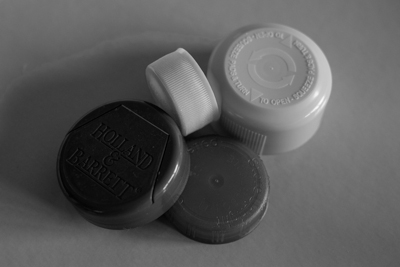 |
| red filter |
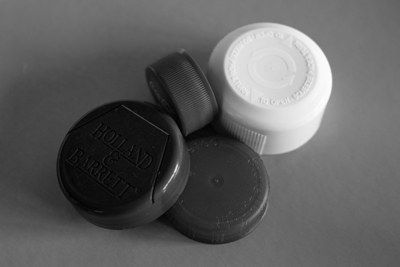 |
| yellow filter |
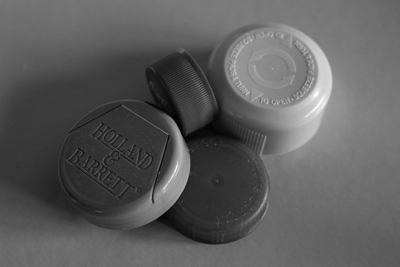 |
| green filter |
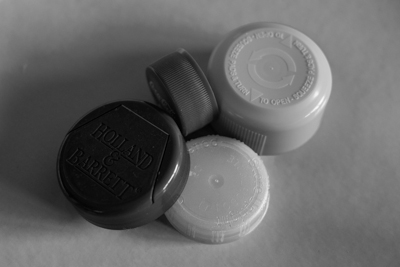 |
| blue filter |
Friday, 11 January 2013
Assignment 3 - Preparatory thoughts
I want to tackle a number of themes or subject types for this Assignment. It would make sense to have 4 themes and take 1 of each relationship for each theme. However, in practice with some themes it may be difficult to capture all the relationships. Anyway, themes I think I'm going to use are:
Amend - 12/1/13
Tried doing this with my son but he got bored after about 2 minutes. Need to find another model.
Amend 12/1/13
Think I might really struggle to find much colour in nature at the minute. The sky is either completely over cast or completely blue. And there is very little colour in the trees....
- The Street (I can take a similar approach here as I did for Assignment 2)
- Still life (as stated previously I want to do found still life's rather than staged ones. However, looking at the brief for the assignment it actually says that using both arranged and found subjects is recommended, so I'll bear this in mind)
- Portraits (I'm thinking that experimenting with different clothes and backgrounds could work here)
- Nature (I think the palette will be limited here, but being able to demonstrate an ability to find less obvious colours will be good. The palette will be especially limited as it's the middle of winter.)
The Street
As above, I can take a similar approach as previous. No need to think too much about the specifics of what I'll photograph.
Still life
Again, think I just need to look for inspiration on this one. However there are a few things I want to look out for:
Complementary - cool morning light with something standing out
Similar - warm colours, tungsten light
Amend - 12/1/13
Come up with a few subjects for this now:
Amend - 12/1/13
Come up with a few subjects for this now:
- The rather tacky gnome in the back garden has red, yellow and blue on it
- Coloured pegs on the washing line
- Coloured bottles in the bathroom
Portraits
Complementary - Green top against red brick
Similar - Same Green top against trees/bushes
Contrast - Red top against blue background
Accent - any of the above where I can find a large enough background to keep the subjects' top small
Amend - 12/1/13
Tried doing this with my son but he got bored after about 2 minutes. Need to find another model.
Nature
There is a tree I really like which I'd like to take some photographs of for this.
Complimentary - blue and orange sky
Similar - green trees, blue sky
Contrast - green trees, orange sky
Accent - small green tree against blue sky
Amend 12/1/13
Think I might really struggle to find much colour in nature at the minute. The sky is either completely over cast or completely blue. And there is very little colour in the trees....
Subscribe to:
Posts (Atom)